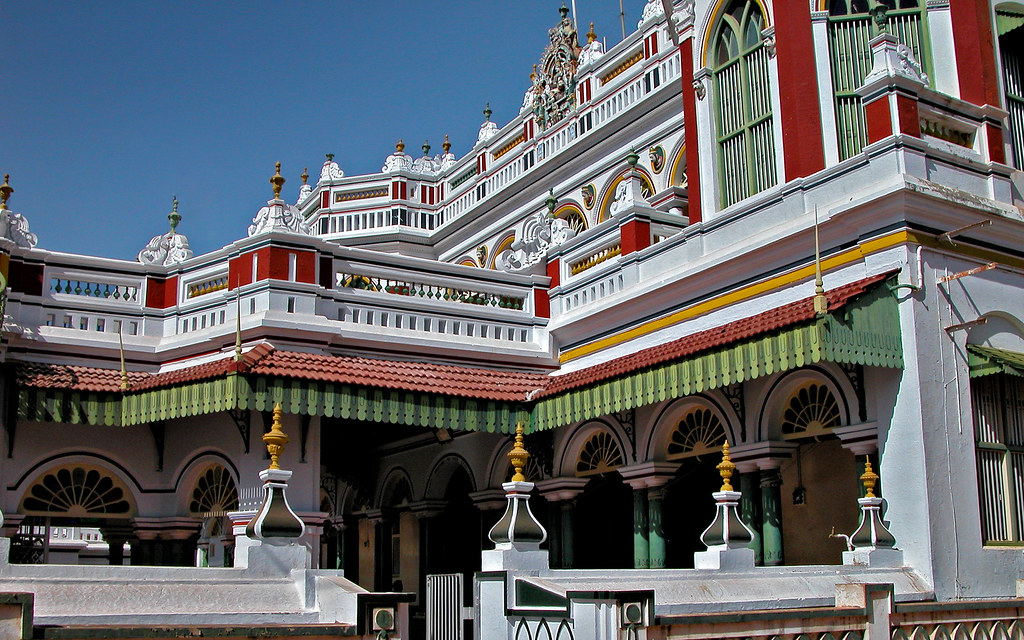
What Is Kanadukathan Palace?
Kanadukathan Palace, often referred to as the Chettinad Palace, is one of the most recognisable heritage landmarks in the Chettinad region. Located in the village of Kanadukathan near Karaikudi, it represents the extraordinary scale, craftsmanship and international influences that shaped the grand homes of the Nattukottai Nagarathar community.
From the street, the palace already makes its statement. A monumental entrance, deep verandahs, decorative details, columns and a richly composed facade create the impression of a building designed not merely to be lived in, but to be remembered.
And that is perhaps the best way to experience Kanadukathan Palace today: as a remarkable piece of Chettinad architectural heritage that can still be admired from the outside.
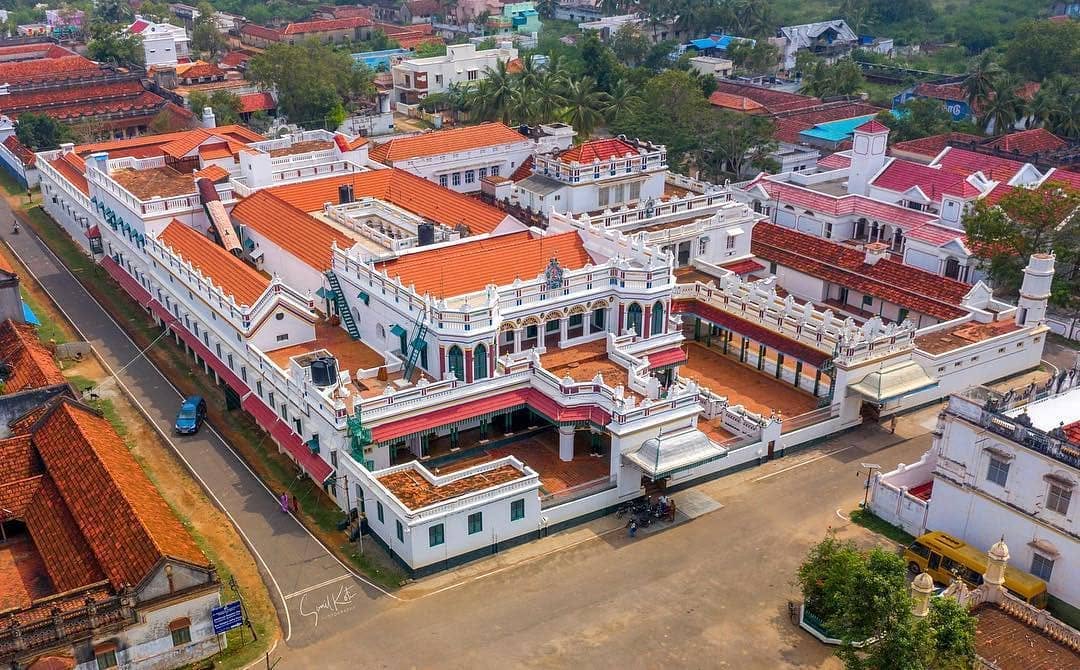
Why Is Kanadukathan Palace Famous?
Because it captures the essence of Chettinad in one extraordinary building: wealth, hospitality, craftsmanship, climate-conscious planning and a cosmopolitan taste brought home from overseas.
Grand Chettinad scale
Large entrances, verandahs, halls and courtyards reflect the scale of traditional Chettiar mansions.
East meets West
Local architectural planning sits alongside materials and decorative influences sourced from different parts of the world.
Masterful woodwork
Carved teak elements, doors and architectural details are among the features associated with Chettinad mansions.
A living heritage landscape
The palace sits within Kanadukathan, where streets lined with historic mansions are part of the experience.
What Is the History of Kanadukathan Palace?
The palace is associated with Rajah Sir Annamalai Chettiar, a prominent Chettiar industrialist and philanthropist. Sources date the palace to 1912 and describe a construction period of around seven years.
Its story belongs to a much larger chapter in Chettinad history. During the late 19th and early 20th centuries, prosperous Nattukottai Nagarathar families built enormous residences in their home villages, bringing together local building traditions with materials, ideas and craftsmanship encountered through their international trading networks.
That global connection is visible in the architecture. Italian marble, Burmese teak and Belgian glass are among the materials associated with the wider Chettinad mansion tradition, while the planning, courtyards and verandahs remain deeply rooted in the region.
Look at it as a conversation between Chettinad and the wider world.
The building's identity comes from the way local planning and global materials were brought together rather than from either influence alone.
What Makes Kanadukathan Palace Architecture Special?
Traditional Chettinad architecture is immediately recognisable for its axial planning, courtyards, deep verandahs, tall columns, ornamented entrances and extraordinary attention to detail. Kanadukathan Palace brings these qualities together on an imposing scale.
The main entrance creates a dramatic first view, with a large gateway, decorative forms and a generous reception-like frontage.
Traditional raised verandah spaces are an important part of Chettinad houses, offering shade, seating and a transition between street and home.
Repeated columns, arches and decorative openings create the rhythm that makes Chettinad mansions so visually distinctive.
Courtyards and connected halls were designed around family life, ventilation, light and large gatherings.
What Materials Were Used in Kanadukathan Palace?
One of the most fascinating aspects of Chettinad architecture is the way materials travelled into these villages from far beyond Tamil Nadu.
Burmese teak
Used extensively in Chettinad mansions for substantial doors, beams, columns and carved architectural details.
Italian marble
Associated with the luxurious flooring and finishes found in grand Chettinad homes.
Belgian glass
Coloured and stained glass became one of the memorable decorative features of many Chettinad mansions.
Athangudi tiles
The handmade flooring tradition of Athangudi became an important part of the wider Chettinad architectural vocabulary.
Together, these materials tell a story of a community whose commercial networks connected Chettinad with ports and markets far beyond the region.
What Can You See Outside Kanadukathan Palace?
Since general interior access is currently restricted, the exterior deserves your full attention. Slow down instead of simply taking one photograph and leaving.
The monumental entrance
Study the proportions, decorative details and layered elements around the main gateway.
Columns & verandahs
The repeating columns and shaded frontage show how structure and climate-conscious design work together.
Roofline details
Look upward for ornamental parapets, sculptural details and decorative roof elements.
Doors, windows & woodwork
Even from outside, the scale and craftsmanship of Chettinad woodwork can be appreciated.
Can You Enter Kanadukathan Palace?
For now, visitors should plan to view the palace from the exterior. Exterior photographs can be taken, but the palace should not be treated as a regularly open public interior attraction.
This is important when planning a Chettinad trip. You may find older articles, photographs or videos showing people inside the palace. Those experiences do not necessarily reflect the access available to ordinary visitors today.
Do not attempt to enter restricted areas. Respect the property, residents or caretakers and any instructions given at the site.
The facade can be appreciated from outside.
Do not assume public entry is available.
Can You Take Photos at Kanadukathan Palace?
Yes — exterior photography is possible at present. And the facade gives you plenty to work with.
Arrive when the light is gentle and let the architecture do the work.
Early morning and late afternoon can give the facade softer shadows and more definition. A wide lens is useful for capturing the building's scale, while a longer lens helps isolate decorative details.
Be considerate while photographing. Avoid blocking the road, climbing walls, entering private areas or using drones without the necessary permissions.
What Is the Best Time to Visit Kanadukathan Palace?
For an exterior visit, early morning or late afternoon is usually the most pleasant choice. The light is softer, temperatures are more comfortable and the architecture photographs beautifully.
Soft light
Good for facade photography and a quieter heritage walk.
Strong contrast
Bright light can emphasise white walls but may create harsh shadows.
Warm atmosphere
A good option for softer architectural photographs before sunset.
Allow extra time to walk through the surrounding streets. Kanadukathan is not just about one palace; its historic mansions and village layout are part of the heritage experience.
What Places Can You Visit Near Kanadukathan Palace?
Kanadukathan works best as part of a wider Chettinad heritage route. Instead of rushing between isolated attractions, spend a day exploring the architecture, crafts, temples and food of the region.
Chettinad mansions
Walk the surrounding streets and look for the extraordinary variety of old merchant homes.
Athangudi
Combine the palace visit with Athangudi's famous handmade tile tradition and heritage architecture.
Pillayarpatti
A major temple destination that can be included in a broader Chettinad itinerary.
Karaikudi
Return to Karaikudi for local food, shopping, museums and more heritage experiences.
A heritage-focused route can turn a single palace stop into a full Chettinad day.
Has Kanadukathan Palace Appeared in Films?
Kanadukathan and its grand heritage buildings have attracted filmmakers because their architecture can instantly create a sense of another era. Kanadukathan Palace has also been associated with film locations, including Kandukondain Kandukondain.
But even if you have seen the palace on screen, the real attraction is standing in front of it and noticing the details that a camera often misses — the proportions of the facade, the depth of the verandah and the layers of ornamentation.
Frequently Asked Questions About Kanadukathan Palace
What is Kanadukathan Palace famous for?+
It is famous for grand Chettinad architecture, ornate facade details, carved teak, spacious planning and the blend of Indian and European influences seen across the region's historic mansions.
Who built Kanadukathan Palace?+
The palace is associated with Rajah Sir Annamalai Chettiar and is commonly dated to 1912, with construction described as taking about seven years.
Where is Kanadukathan Palace located?+
It is located in Kanadukathan in the Chettinad region of Sivaganga district, Tamil Nadu, around 15 km from Karaikudi.
Can tourists enter Kanadukathan Palace?+
General interior access is currently restricted. Plan to view the palace from the exterior unless you have specifically confirmed permission for entry.
Can I take photos of Kanadukathan Palace?+
Exterior photography is currently possible. Respect the property, avoid restricted areas and follow any instructions from caretakers or residents.
Is there an entry fee for Kanadukathan Palace?+
Because general interior access is restricted, visitors should not assume that a standard public ticket or fixed entry fee is available. Confirm access arrangements before planning an interior visit.
What is the best time to visit Kanadukathan Palace?+
For exterior viewing and photography, early morning or late afternoon generally offer softer light and a more comfortable experience.
How far is Kanadukathan Palace from Karaikudi?+
The palace is roughly 15 km from Karaikudi, making it an easy addition to a Chettinad heritage day trip.
One palace. One village. A whole architectural story.
If you're exploring Karaikudi, give Kanadukathan more than a quick photo stop. Walk the heritage streets, look closely at the mansions and then continue towards Athangudi and the wider Chettinad region.