
What Are Athangudi Tiles?
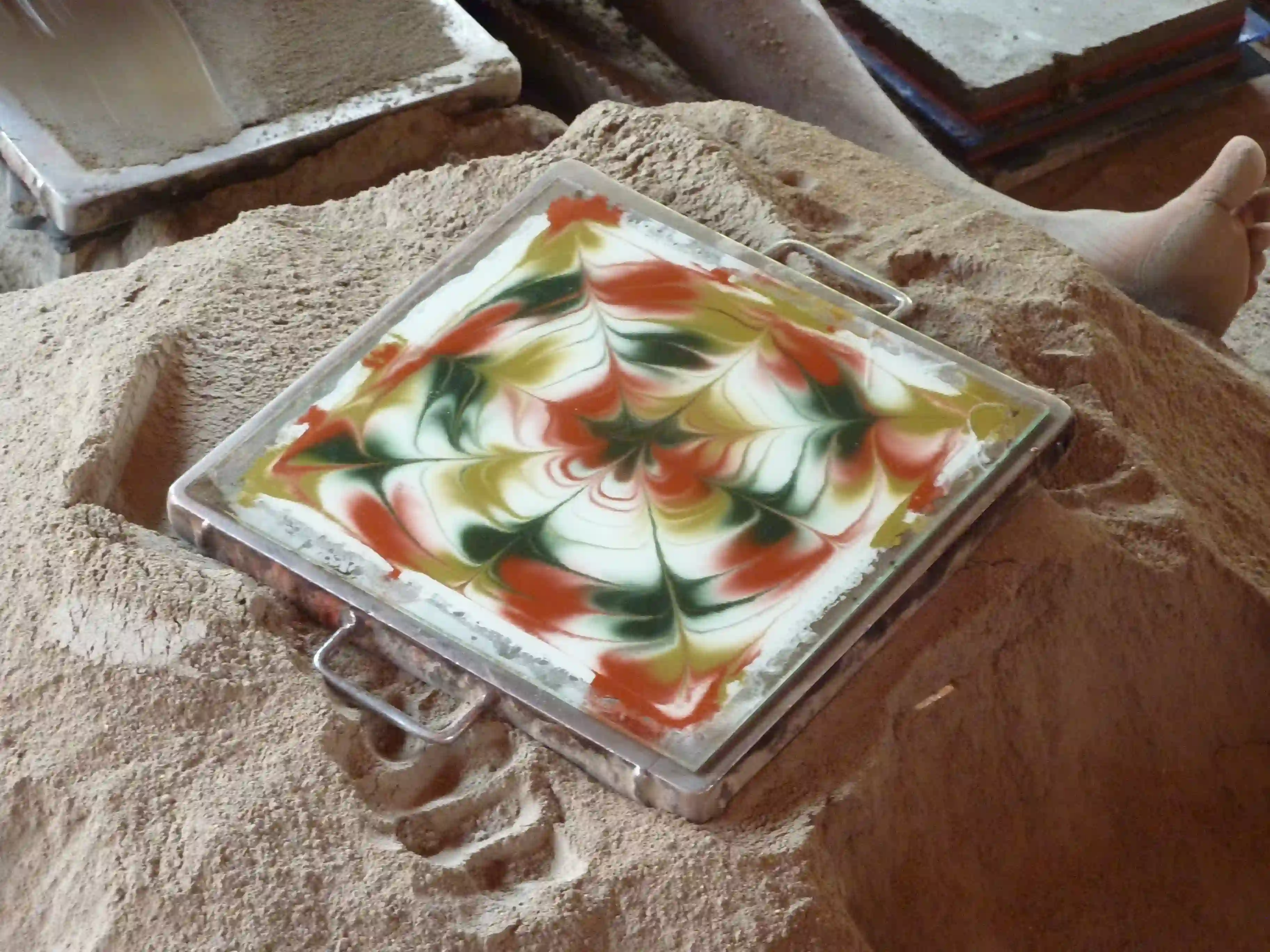
Athangudi Tiles are handmade decorative cement tiles traditionally associated with Athangudi and the wider Chettinad region of Tamil Nadu. Unlike mass-produced factory flooring, each tile is created by hand, with artisans carefully building its pattern layer by layer over a glass surface.
The result is a floor that feels less like a manufactured product and more like a piece of craft. Strong geometric borders, flowers, diamonds, stars and repeating motifs bring colour and rhythm into Chettinad homes, heritage buildings and increasingly into contemporary interiors.
The craft is also commonly described as Chettinad tiles or handmade cement tiles.
Why Are Athangudi Tiles So Famous?
The answer is simple: you can see the human hand in them.
Athangudi tiles are known for their vivid colours, intricate patterns, distinctive sheen and traditional craftsmanship. Their visual language fits naturally into Chettinad architecture, where floors are often treated as an important part of the overall design rather than just a practical surface.
Every pattern is built by hand
The colour sections are filled manually according to the chosen motif.
The finish comes from the process
The glass surface helps create the characteristic smooth sheen of the finished tile.
Designs feel timeless
Traditional geometric and floral motifs can work equally well in heritage and modern spaces.
They carry Chettinad identity
The tiles are closely connected to the visual character of Chettinad's grand homes.
What Is the History of Athangudi Tiles?
The story of Athangudi tiles is closely tied to the history of Chettinad's merchant community and its remarkable houses. Chettiar families built large mansions using materials and architectural influences from India and overseas. Imported flooring and decorative materials were part of this visual world.
According to the cultural documentation of Chettiar crafts, local tile-making developed as an ingenious response to the difficulty and expense of repairing imported tiles. Craftspeople began producing decorative flooring locally, creating a tradition that eventually became strongly associated with Athangudi itself.
A craft born from Chettinad's love for beautiful buildings.
What began as a practical local craft became part of the architectural identity of the region.
How Are Athangudi Tiles Made?
This is where Athangudi tiles become truly fascinating. The process is deceptively simple to watch, but it requires precision, a trained eye and plenty of patience.
A clean glass plate forms the smooth base on which the pattern is created.
A metal stencil or patterned frame is positioned over the glass to create the design.
Coloured cement mixes, commonly using mineral or oxide pigments, are carefully poured into the different sections.
A sand-and-cement mixture is added over the decorative layer and levelled by hand.
After the mixture has set sufficiently, the frame is carefully removed.
The tile is cured in water before being brought out for further drying.
After curing, the tiles are dried and finished, revealing the pattern and the characteristic sheen.
Unlike conventional ceramic tiles, the traditional Athangudi process does not depend on high-temperature kiln firing. That is one of the reasons the craft is often discussed in the context of lower-energy and eco-conscious building traditions.
What Is Special About Athangudi Tiles?
The biggest difference is that the design is not simply printed onto the surface. It is created as part of the tile-making process itself.
That gives Athangudi tiles a distinctive depth and character. Slight variations between pieces are part of the handmade nature of the craft rather than a manufacturing defect.
The small differences that come with handcrafting are part of what gives traditional tiles their character.
What Are the Most Popular Athangudi Tile Designs?
Walk through an Athangudi tile workshop and the first thing that catches your eye is the sheer variety of patterns.
Geometric patterns
Diamonds, grids, stars, circles and repeating shapes are among the most recognisable styles.
Floral motifs
Flowers and botanical-inspired forms bring a softer character to the floor.
Borders and runners
Border tiles can frame courtyards, halls and rooms with a strong architectural rhythm.
Custom patterns
Many makers also offer custom colours and motifs for restoration and contemporary projects.
Are Athangudi Tiles Eco-Friendly?
In their traditional form, Athangudi tiles are often considered a more low-energy flooring craft because they are handmade, use cement, sand and pigments, and are cured and naturally dried rather than fired in a high-temperature kiln.
But “eco-friendly” should not be treated as a blanket claim for every tile or every supplier. Transport, cement production, packaging, wastage and installation all affect the overall environmental footprint.
What is undeniable is that buying directly from skilled local makers helps keep a traditional craft and its associated skills in the region.
Athangudi Tiles vs Ceramic Tiles: What Is the Difference?
Neither is automatically “better” for every project. Athangudi is particularly attractive when heritage character, handcrafted detail and design individuality matter.
How Much Do Athangudi Tiles Cost Per Square Foot?
There is no single fixed Athangudi tile price. The final cost can change significantly depending on the pattern, number of colours, tile size, quantity, customisation, supplier, transport and installation.
Ask for a current quotation before comparing suppliers.
Current published online prices vary widely, so a quote based on your exact design, quantity and delivery location is more useful than a generic per-square-foot number.
For a project in Karaikudi or elsewhere in India, also ask whether the quoted price includes packing, transport, wastage allowance, installation and finishing.
How Do You Clean and Maintain Athangudi Tiles?
Athangudi tiles are relatively straightforward to maintain, but gentle cleaning is important if you want to preserve their surface and sheen.
Sweep regularly so dust and grit do not accumulate on the surface.
Use a mild, pH-neutral cleaner and avoid harsh acidic or abrasive products.
Wipe spills promptly, especially strongly coloured foods and liquids.
Follow the installation and sealing recommendations provided by your tile maker or installer.
Where Can You See Athangudi Tile Making?
If you are travelling through Chettinad, visiting Athangudi tile workshops is one of the best ways to understand the craft. Seeing an artisan pour colour into a stencil, build the tile and prepare it for curing gives you a completely different appreciation for the finished floor.
Workshops and manufacturers operate in Athangudi and nearby parts of the Karaikudi region. Because individual workshops have their own working hours and visitor policies, contact the workshop before travelling if you specifically want to watch the making process.
A short workshop visit can turn a shopping stop into one of the most memorable cultural experiences of your Chettinad trip.
Why Athangudi Tiles Matter to Chettinad
Athangudi tiles are more than a flooring material. They are part of the visual language of Chettinad — a region where architecture, craftsmanship and everyday life have always been closely connected.
When you walk through an old Chettinad mansion and notice the floor before you notice the ceiling, that is the point. The tile is not simply underneath your feet. It contributes to the identity of the entire room.
Today, the craft is finding a new audience among architects, designers, homeowners and heritage-restoration projects. That revival gives Athangudi's artisans a reason to keep an old skill alive.
Frequently Asked Questions About Athangudi Tiles
What are Athangudi tiles?+
Athangudi tiles are handmade decorative cement tiles associated with Athangudi and the Chettinad region of Tamil Nadu. They are traditionally made over glass using coloured cement or mineral-oxide mixes, sand and cement, followed by curing and drying.
How are Athangudi tiles made?+
A patterned stencil is placed over a glass surface, coloured mixes are poured into the design, the tile body is added and levelled, and the tile is then set, water-cured, dried and finished.
Why are Athangudi tiles famous?+
They are famous for their handmade process, bold patterns, vibrant colours, distinctive sheen and strong connection with Chettinad heritage architecture.
How much do Athangudi tiles cost per sq ft?+
Prices vary according to design, size, colours, quantity, supplier, transport and installation. Ask the manufacturer for a current quotation based on your exact requirement.
Do Athangudi tiles fade?+
Traditional oxide-based colours are part of the tile's decorative layer, but long-term appearance depends on pigment, workmanship, exposure, installation and maintenance. Ask the maker about the specific colour and application you are considering.
Are Athangudi tiles eco-friendly?+
Traditional Athangudi tile production is relatively low-energy because it is handmade and does not use high-temperature kiln firing. The overall footprint still depends on materials, transport, packaging and installation.
Where can I buy Athangudi tiles near Karaikudi?+
Athangudi and nearby areas have several tile manufacturers and workshops. For current designs, prices and availability, contact a local maker directly before visiting.
Can I visit an Athangudi tile factory?+
Some workshops may welcome visitors, but access varies. Contact the workshop in advance if you want to see the production process.
See the craft. Walk the streets. Understand the story.
If you're exploring Karaikudi and Chettinad, pair an Athangudi tile workshop visit with heritage mansions, Athangudi Palace, Kanadukathan, local food and other cultural attractions.